Navigate

Showing posts with label emotion. Show all posts

August 12, 2015

#BrainBits 3: "Why Do I Get Hangry (Angry When Hungry)?"

This is the latest post in my #BrainBits series, where I'll answer your burning neuroscience questions in 60 seconds or less. If you have a question you'd like me to answer, you can e-mail me, tweet me, or submit your questions anonymously here.

Niklas Hellerstedt (Flickr)
Why do we get hangry?  One lovely fall day a few years ago, my now-husband (I'm not sure why he married me after this) almost left me on the side of the road. We had just left a Penn State football game, and I was H-U-N-G-R-Y.

My resulting behavior was far from what you might consider "ladylike," much less "civilized." I won't even re-type the words that were spoken. Eventually, a pit stop for a burger and fries managed to tame my inner beast.

What causes the sensation of "hanger" - the phenomenon of feeling angry and short-tempered when hungry? Coincidentally, fellow The Conversation writer and obesity/nutrition researcher Dr. Amanda Salis recently covered this topic here. Do check out her article for details, as I'll be mostly summarizing below.

Basically, three major factors are thought to contribute to our bad tempers when we're famished:

Glucose metabolism. Mikael Häggström (Wikimedia Commons)
1. When we eat, carbohydrates are broken down into simple sugars, one of which is glucose. Right after a meal, the levels of glucose in our blood are high. Over time, though, blood-glucose levels drop. Eventually, if these levels fall far enough, your brain will perceive it as life-threatening. Unlike other organs, which have an energy back-up, your brain relies solely on glucose as a fuel source and requires a continuous supply. In fact, despite accounting for only 2% of your body's mass, your brain is estimated to use up 20-23% of your body's energy intake throughout the day, even at rest. Low blood glucose, obviously, signals, "imminent death! Act now!"

2. To our other organs, low glucose ramps up hormones that act to increase glucose in the body. Among these are epinephrine and cortisol, which are synthesized in the adrenal glands. These are both stress hormones, released when our body perceives threat, like a lion chasing us or an organic chemistry exam being handed out in class. That's enough to change someone's mood for the worse, right?

3. As it turns out, anger and hunger don't only share many of the same letters, but they're also controlled by similar genes. One of these genes produces a protein called neuropeptide Y, which not only stimulates eating behavior, but also regulates anger and aggression. Long story short, I probably had pretty high levels of neuropeptide Y after that football game.

What about you?
Do you get hangry, too?
Let us know
In this anonymous poll!

Stay tuned for next week's #BrainBits: "Why do we feel 'pins and needles' when our appendages fall asleep?"
May 28, 2014

Does Childhood Stress Explain Why Harry Potter Was So Short for His Age?

Warner Bros.
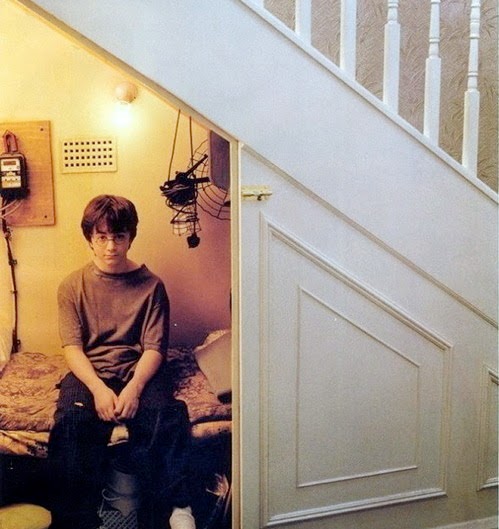
“Perhaps it had something to do with living in a dark cupboard, but Harry had always been small and skinny for his age…[he] had a thin face, knobbly knees…and wore round glasses held together with a lot of Scotch tape because of all the times Dudley had punched him on the nose.”

And so we are introduced to The Boy Who Lived, the Chosen One—the famous Harry Potter. His seven books have been translated into 73 different languages and sold over 450 million copies worldwide.

But readers wouldn’t guess, after author J.K. Rowling’s introduction of Harry in Chapter 2, that the orphaned boy would be the one to defeat the powerful and devastating Dark Lord Voldemort. Snubbed by his only remaining family, bullied by his cousin and classmates, and residing in the cupboard under the stairs, Harry is short, skinny, and totally non-threatening.

And it’s clear to us why. His Uncle Vernon, Aunt Petunia, and cousin Dudley Dursley—to whom he was passed as an infant after the death of his parents— ensure that he’s properly malnourished at all times. After spending a day cleaning the Dursleys’ entire house and doing yardwork in the blazing July heat (on his 12th birthday, no less), Aunt Petunia prepares for Harry “two slices of bread and a lump of cheese” before sending him off to hide during their dinner party with the Masons. It’s no wonder he’s so small for his age.

But perhaps something other than the physical abuse held back his growth, too. Beyond the malnourishment, it’s possible that Harry Potter suffered from something similar to what is known as psychosocial short stature.

March 11, 2014

Why We're Wired to Binge-Watch TV

In this day and age of microblogging, distracting smartphones, 140-character tweets, and compulsive multitasking, it seems a little backward that one of the top post-workday hobbies of young folks is to become completely engrossed in the complicated storylines of Game of Thrones, Breaking Bad, and House of Cards for hours on end.

A new type of consumer has evolved in recent years—the love child of the Couch Potato and the Channel Surfer, raised by streaming devices and nurtured by entire seasons of shows available at the click of a remote.

For just a few dollars a months, subscribers to Netflix, Hulu Plus, and Amazon Instant Video have access to thousands of streaming movies and TV shows updated regularly. And with Netflix’s new post-play feature, which prompts viewers to play the next episode just as the credits of the last one begin rolling, it’s easier than ever to succumb to the captivating lure of Walter White and Frank Underwood.

Indeed, the birth of the “binge-watcher” has been an intriguing, unexpected development in the past five years. Neuroscience, it turns out, can partially explain the phenomenon.

February 6, 2014

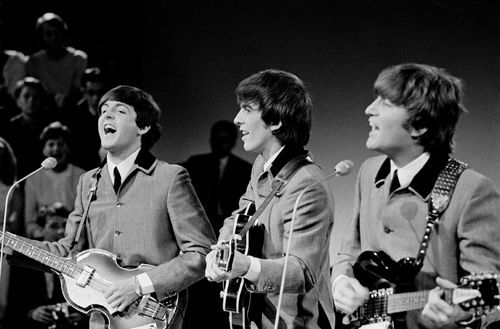
Love, Love Medulla: The Neuroscience of Beatlemania

The term “Beatlemania” has come to be associated with many things over the past half-century.

Coined in October 1963 during the Beatles’ tour of Scotland, the extent of Beatlemania in the United States is obvious by record sales alone. Between the 1964 release of “I Want to Hold Your Hand” on the Billboard Hot 100 and the Let it Be EP in 1970, the Lads from Liverpool had a Number One single for, on average, one out of every six weeks, and the top-selling album once every three weeks.

But to most, “Beatlemania” incites a vivid image of frenzied fans, predominantly teenage girls, looking as though they’ve just witnessed a gruesome murder. Fat buttons proclaiming “I LOVE GEORGE” adorn cardigan sweaters, hanging on for dear life as their owners attempt to push past overwhelmed human police barricades. Nurses stand at the ready, armed with smelling salts and ready to rouse the next fainting victim. Lots of tears. Lots of screaming.

As we approach the 50th anniversary of John, Paul, George, and Ringo’s first U.S. appearance on The Ed Sullivan Show this Sunday, we can’t help but look back and laugh nostalgically. Just what was it about the moptop haircuts, Cuban heels, and “yeah yeah yeah”s that turned us, our parents, or our grandparents into primeval beings whose sole purpose was to drown out the blare of a Vox AC30 amplifier?

As it turns out, neuroscience can (partially) explain the phenomenon.

December 12, 2013

'Twas the Neural Pathway of Christmas

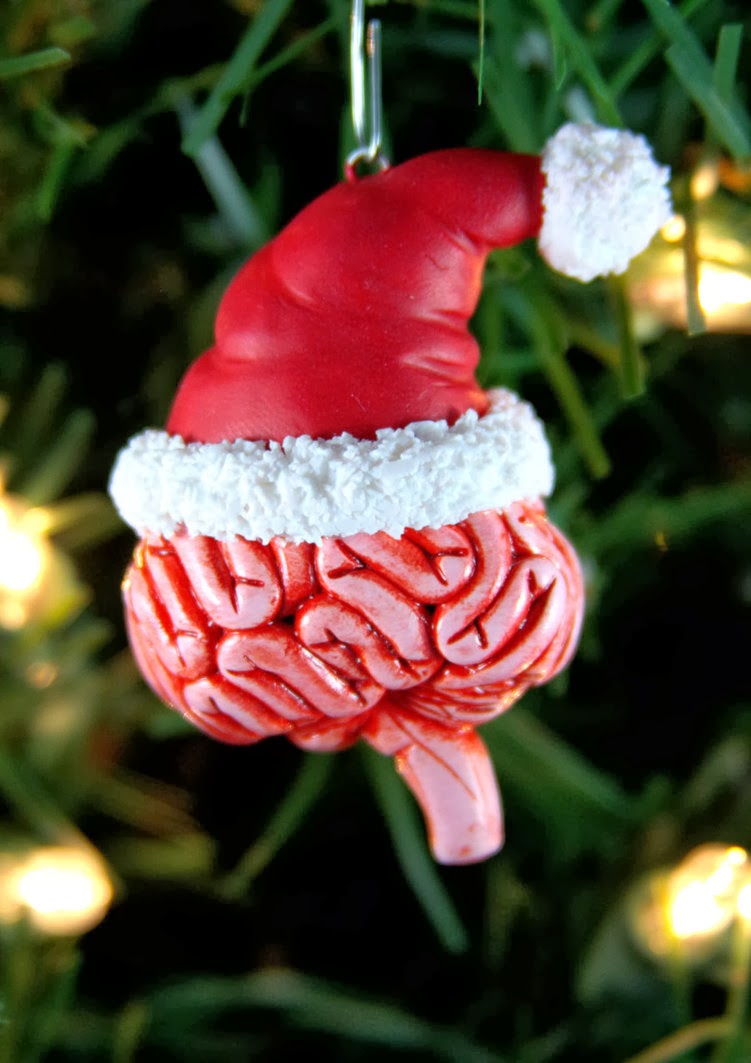
The following is an original and extraordinarily nerdy rendition of the classic Clement Clarke Moore poem adapted by yours truly, describing the basic pathway of happiness one feels when one sees a pleasant image—like Santa Claus!

Ornament by Neverland Jewelry.
'Twas the neural pathway of Christmas as my eyes do behold
A vision of St. Nicholas—red, so jolly, and bold.

His image burns into my retina, transmitting down optic nerve
Before the optic chiasm crosses in an unexpected swerve.

From optic tract to LGN—the sensory relay
Of six alternating layers; a complex neural highway.

Radiation to layer 4 of the visual cortex comes next—
But what follows leaves even the greatest minds perplexed.

For this vision becomes a signal, signal becomes a sense
Conversion of molecule to emotion—a feeling so intense.

Glutamatergic synapses fire onto the VTA—
A group of tiny neurons on the floor of the midbrain.

But wrong you are if you believe the brain to be tired,
For from VTA to nucleus accumbens dopamine is fired.

It is from this tiny region that glimpsing Santa brings such joy—
Pleasant emotional perception for every girl and boy.

So fleeting this emotion, as your auditory cortex hears,
 "A brainy Christmas to all—now, onward, reindeer!"

August 29, 2013

Why do we cry when we're happy?

It's been awhile, braniacs. But I have an excuse! A good one, I swear!

I got married to the love of my life on August 10—who I, of course, met in a neuroscience lab a few years ago.

Something inexplicable has been plaguing me the past few months, though. Getting married, including the months of stressful planning and nightmares leading up to the big day, was the happiest time of my life.

I reveled in choosing dresses and shoes, booking vendors, and constructing centerpieces. I saw my family and friends a lot over the past few months. And, after all, I was celebrating one of the purest and most joyful things that can be celebrated in this crazy, mixed-up world: love.

But, for some reason, I found myself crying a lot more. Not out of sadness or frustration or hopelessness, though.

I mean, I couldn't even keep it together while walking down the aisle—something every girl, growing up, likes to daydream about...right? (See pathetic photo.)

Most of us have heard that crying, in essence, is good for us—that it relieves us when we're sad, releases stress and toxins, yadda yadda.

So what was with my sobbing on what was inarguably the happiest day of my life?

June 19, 2013

LEGO Faces are Getting Angrier; So What?

Transport yourselves back to sprawling across the living room floor—colored blocks scattered like confetti about the carpet—building the highest towers and fattest spaceships (without directions, of course), all the while ignoring your parents' yelps as they step on a rogue piece.

There's nothing quite like LEGO.

And certainly there's nothing quite like those ubiquitious yellow, blocky LEGO faces.

But a piece in The Daily Mail last week cites that "LEGO faces are getting angrier," and that this may, in turn, "be harming children's development."

Christopher Bartneck, of the University of Canterbury in New Zealand, will be presenting his findings at the First International Conference on Human-Agent Interaction in Japan this August. The central theme of the conference will explore how humans interact with objects that represent different personalities.

Whoa whoa whoa...let's slow down a bit. Perhaps LEGO faces have indeed become angrier—and more disdainful, more fearful, more smug—since their 1975 debut. But is it actually affecting the emotional and mental well-being and learning of a developing child?

May 16, 2013

Misophonia: enraged by everyday sounds

Very soon, I'll be joining forces with Scitable, a network developed by Nature Publishing Group.

(Don't worry—you won't miss any of my writing if you follow Gaines, on Brains!)

In preparation, I've got a piece on the Scitable Student Voices blog today about misophonia, or hatred of certain sounds.

Check it out here!

April 27, 2013

How stores trick our senses to make us buy more (Part 4 of 5: Smell)

(Read the previous posts in this series: tastesight, and touch).

Grocery shopping is a real chore (at least, in my mind).

It takes planning, list-making, and coupon clipping. One spends an hour ambling up and down twenty aisles, eventually shelling out a hundred dollars or so. Then there are heavy bags to carry into the house, in pairs—and then these items have to be put away. Phew.

For many, this is a weekly, repetitive torture. But for me, there is one upside. Regardless of whether I'm in the meat department, perusing the dairy, or contemplating my pickle options, I can smell it: the enticing aroma of the bakery, pumped sneakily through the air conditioning system. More often than not, I'll check out with a cookie or two (or twenty).

Not only is the ability to smell one of humans' most primitive senses, but it is also closely tied to memory and emotion. How do stores take advantage of our sense of smell to tempt us to buy more than we bargained for?

April 10, 2013

Why do we sigh?

I sigh. A lot.

And, I realize, it's only when I feel discontent.

I sigh when I'm frustrated by statistics and can't make sense of the code on my computer screen. When I sit in class for three hours and daydream of all the productive things I could be doing. When I'm confused by the competing research literature on the desk in front of me. When I'm disgruntled by somebody's ignorant comments.

But why do I do it? Does it help regulate my breathing when I'm stressed? Is it a subconscious action I do to express to those around me that I'm anxious or upset? Perhaps a mental reset button, so to speak?

In fact, it may be a combination of all three.

February 17, 2013

Fainting at the sight of blood

I remember the day so well because the circumstances were so ridiculous.

It was my freshman year of high school, the Friday before homecoming weekend. Football players and cheerleaders wore their respective uniforms to class, I had a blue pawprint painted on my face, and everyone in class was antsy in anticipation of the pep rally at the end of the day.

Our health teacher put on some Red Cross first aid video to appease our restlessness. Halfway through the video, an actor began "bleeding" profusely from the arm. Just as his friend ripped off a bit of his t-shirt to staunch the blood, I saw a flash of blue jersey out of the corner of my eye.

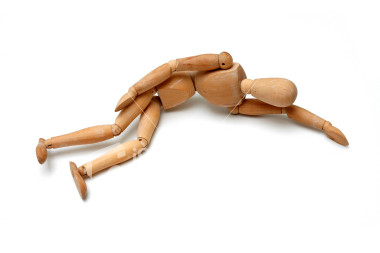
One of the star football players in my class—a pretty massive beast of a human being—slumped down his chair then lay flat on the floor. He was passed out cold.

Do you get woozy when you see blood? It seems like an oddly dramatic physiological response for just seeing a little red liquid, right? As it turns out, fainting at the sight of blood may be a primitive reflex buried deep in our brain.

January 28, 2013

Smell and memory: Old feelings in a new place

My friend texted me something today that she thought I'd find interesting.

She had a meeting for work in an office she'd never entered before. Immediately as she entered the room, conflicting feelings of happiness and awkwardness washed over her.

The smell. It wasn't necessarily good or bad—just distinctive. And it didn't smell like anything in particular. All she knew was that it had an odor exactly like her boyfriend's dorm room when she was a freshman in college—something she hasn't experienced in five years—bringing back the paired feelings of excitement and nervousness that come with new relationships. And those of, well, being in a boy's stinky dorm room.

We've all experienced this at one time or another: a familiar perfume, a family recipe in the oven, the scent of a bonfire—they all bring back a flood of memories, momentarily whisking us away to re-live our past. But why does this happen?

December 8, 2012

How stores trick our senses to make us buy more (Part 1 of 5: Taste)

On the first day of Christmas my true love gave to me...

...a bunch of crap I really didn't need.

With just sixteen shopping days until Christmas, it's easy to get roped into buying things we might not actually have on our gift list.

Most times, we're conscious of our impulse purchases—there's a great sale on this! I'll use that later!

But sometimes reasons for our frivolous purchases are not so obvious to us. Don't feel too bad—store chains actually hire researchers to study our shopping patterns and take advantage of our weaknesses.

Our brains are endlessly fascinatingly organs—but sometimes they betray us. The following is the first post in a five-part series on how stores trick our senses into shelling out more money than we may intend.

November 19, 2012

Why you should give thanks this Thursday—and always

Sometimes our world can be pretty crappy.

There's violence and crazy people. Maybe your candidate didn't win the election. Perhaps you hate your job, and that—on top of life's other personal, familial, and financial burdens—is wearing you down. Maybe you got to your morning coffee after it went cold, and that set off a bad tone for the rest of your day.

If you're celebrating Thanksgiving this Thursday, don't forget the true meaning of the holiday between the stressful hubbub of cooking, shopping, planning, and appeasing Great Aunt Gertie: giving thanks.

As it turns out, expressing gratitude is more than just a nice idea—it's beneficial to your health and happiness.

October 30, 2012

Why are clowns scary?

A couple weekends ago, I came down with coulrophobia. Unfortunately, I have yet to shake the disease.

Because we are Halloween masochists, my friends and I drove out to the Lancaster area for Field of Screams, which can be best described as a horror-movie-set-haunted-house on steroids. Sprinting from room to room offers a completely new, dizzying experience, with different themes and scary people to touch you or chase you down with chainsaws.

But this one room. This one room was unlike any other...

It zigzagged. The walls were tiled with 2x2" black and white checkers. There was a strobe light. I was holding my friend's hand and trying to keep my eyes shut through the flickering.

Out of nowhere, sitting in the corner, tiny and dejected, was this freaking clown. It looked so far away. Then suddenly, not one second later, it was IN MY FACE. The strobe light betrayed my perception of its speed and distance. I cried out. Please, just take me now, and do it quickly...

Hence my newfound coulrophobia, or fear of clowns.

But is coulrophobia a real fear? And, for that matter, what is fear?

October 9, 2012

Facebook-stalking your ex; or, how NOT to move on

Do you have an ex?

Do you have a Facebook profile? Does your ex?

Do you stalk your ex on Facebook?

To the untrained eye, that photo of him eating dinner with...that girl...at Olive Garden is no big deal. But Olive Garden was our place, and—wait, is that the watch I got him? Oh, and it looks like he got into that grad school he wanted to go to. The one for which I edited his personal statement and quizzed him with GRE words...

Ugh.

I'm going to tell you something that you probably already know: you should stop doing this. And I'm armed with the psychology of why it's bad!

August 1, 2012

Paralyze your face, fight depression

I'm willing to bet you've made fun of the expression-less faces on heavily-Botoxed people.

With their vanished crow's feet, missing smile lines, lack of forehead wrinkles, and paralyzed cheeks, eventually we just can't tell whether Botox abusers are happy, sad, angry, worried, or just plain crazy. We can only assume the latter.

As it turns out, this side effect may actually be a good thing for individuals with depression who are resistant to other forms of treatment.

June 30, 2012

Turning trauma into story: The benefits of journaling

For me personally, June has proven to be a rather disappointing and fruitless month. Just when things began to look brighter, I was involuntarily assigned to be the middle vehicle in a double fender-bender two days ago, and my car now needs almost $1,000-worth of repairs. And as a perfect metaphor for the crappiness of the past month, for whatever reason I was not paid my stipend yesterday for the month of June.

I don't often like to talk about my sour feelings with other people because a.) I'm bad at it, and b.) I have another outlet.

Everyday for the past 12 years (save for a few angsty months in 8th grade), I've been writing in a journal. A good, old-fashioned, hardbound, acid-free journal. Most entries are about the frivolous happenings of the day at school, but as I've gotten older, they've increasingly helped me outline my thoughts and feelings while keeping my head on straight.

Feeling so low, I journaled the night before my car accident, listing ten qualities I liked about myself. Remembering what I wrote as I spent the next day at the body shop and on the phone with the police and insurance companies is, I believe, what kept me from simply bursting into tears and throwing up my hands in defeat.

Writing, as many would probably agree, is therapeutic, and studies in the past two decades have explored the health consequences of secrets, expressive language, and the before-and-after physical and psychological symptoms associated with trauma—an area of research referred to as "writing therapy."

January 6, 2012

The neuroscience of optimism: Why we resolve (and believe) we'll be better

If you're within the 32% of Americans that made a resolution for 2012, chances are you're still going strong. Nearly a week in, you've been faced with the temptation, the test of willpower, and likely some teasing from loved ones. And you've only got 360 days left to call your resolution a success? Easy as pie...

Experimentally (and in real life), our species has consistently demonstrated unbridled optimism in the face of adversity. We've failed for the past 20 years'-worth of New Years resolutions—but no, 2012 will definitely be the year we lose weight. Plus, we're all going to quit the jobs we despise and find a better-paying, less stressful, more rewarding job. AND win the lottery (brilliant—we'll never have to go back to work in the first place!).

A study by Tali Sharot and colleagues from New York University explored exactly why we can retain this buoyancy, thanks to insights in brain imaging.

November 28, 2011

The neuroscience of "Christmas Shoes"

Sir, I wanna buy these shoes for my mama, please. It's Christmas Eve and these shoes are just her size. Could you hurry, sir? Daddy says there's not much time...

This little gem by New Song permeates the airwaves each year around this time, igniting tears and snickers alike in its listeners.

We all know why the man agrees to buy the shoes for the boy—I mean, "his clothes were worn and old, he was dirty from head to toe." But how much would he be willing to part with for this anonymous child—$20? $30? $100?

According to a study, the sadder the man, the more he would be willing to pay.