Navigate

Showing posts with label stress. Show all posts

January 10, 2016

What Explains the Allure of Adult Coloring Books?

Lea Latumahina (Creative Commons)
A few months ago, I caved: I bought myself a coloring book.

And maybe you did, too, or perhaps you received one as a gift for the holidays. According to a recent Fortune article, adult coloring books are one of the biggest contributors to this year’s boost in print-book sales. With over 11,000 search results total, five of Amazon’s current top 15 best-selling books are coloring books.

A few nights a week, I look forward to curling up on the couch with my ever-growing collection of colored pencils, tuning in to the latest episode of Serial, and scribbling away at mandalas and Harry Potters — but I still find the trend strange.

I’ve always had a penchant for making new things from scratch — painting, knitting, writing, drawing, baking. But with my coloring book, I’m not really creating anything. The designs are already on the page — I’m just filling in the white spots. And yet the activity is just as soothing to my mind as my more traditionally “creative” hobbies. So what is the psychological draw of a task that feels creative, but doesn’t actually involve creating anything new?

Read the rest of this at New York Magazine's Science of Us here.
July 3, 2015

Orange is the New Bleak: What the SHU Can Do to Your Brain

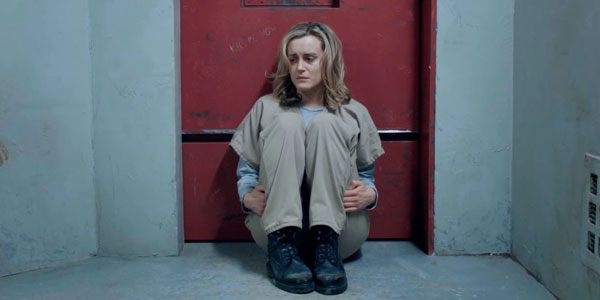
The inmates of Litchfield Penitentiary, the fictional setting for the Netflix TV series Orange is the New Black, are not shy women. 

They’ve landed in prison for murder, fraud, stalking, drug-smuggling, theft, and political activism. They do illegal activities behind the officers’ backs. They make their opinions known loud and clear to one another. And they’re not opposed to throwing a few punches, if duty calls.

But all will cease if you threaten to send them to the SHU. Why?


Netflix

The SHU (pronounced “shoe”), or “security housing unit,” is a separate prison facility designed to isolate inmates from any human contact. While sometimes used to protect the prisoner from harm by others or to themselves (to implement suicide watch, for example), it’s often used as punishment for violating prison regulations. At last count, it’s been estimated that over 80,000 prisoners in the U.S. are housed in the SHU - more than any other democratic country. And while inmates in minimum security may be held in the SHU for a few days at most, those in maximum security prisons can be in solitary for as long as five years.

February 10, 2015

How an ADHD Drug Works to Combat Binge-Eating

Maria Raquel Cochez (Wikimedia Commons)
Last Friday, the U.S. Food & Drug Administration approved the use of lisdexamfetamine dimesylate for treatment of binge-eating disorder. Licensed under the brand name Vyvanse, lisdexamfetamine is the first and only FDA-approved medication for this condition.

But Vyvanse has already been on the market since 2007 for once-daily usage in attention deficit hyperactivity disorder (ADHD) in children and adults.

How does this drug act on two seemingly distinct conditions?

November 20, 2014

#SfN14 Day 4: “It’s Not the Stress that Kills Us; It’s Our Reaction to It” -Hans Selye (Theme E)

This post is part of my series on the 2014 Society for Neuroscience annual meeting. You can read other posts in this series here. I’m also live-tweeting some sessions @GainesOnBrains. Join the conversation at #SfN14.

Day 4 winding down. You wanna know what a stressful situation is?
Being surrounded by 30,500+ people for five days. Whew!
For the most part, I like to think I handle stressful situations fairly well. I take a few deep breaths, tell myself the stressor is really not that big of a deal, then go find something else to do—like exercise or knitting.

The fact of the matter still holds, though: I’m a ruminator. As much as I try to escape, I can’t stop thinking about it if something’s bothering me. It affects my attention, what I eat, and how I sleep, to name a few.

The worst part is that all of this rumination is probably terrible for my cardiovascular health in the long-run. I try to adopt my positive coping mechanisms…but am I actually doomed?

Susan K. Wood of the University of South Carolina spoke on the role of stress and neuroinflammation in not only the susceptibility to depressive symptoms, but also how these symptoms translate to risks for cardiovascular disease. Wood was one of several speakers on Tuesday’s symposium focusing on resilience to stress.

October 29, 2014

This is Why There are So Many Defibrillators in Casinos

Gamblers beware. Nadavspi (Wikimedia Commons)
My brief experience in a casino was pretty typical, I’d say.

Flashing lights. The faint smell of booze. Not much chatter among patrons. The sounds of dice rolling, machines buzzing, and coins clanking. The same butts inhabiting the same stools for hours on end. Everything you see on TV or in the movies is fairly accurate, to my untrained eye.

But one thing I didn’t notice in either the movies or real life, likely due in part to the gaudy décor, was the abundance of defibrillators lining the walls.

While nearly as common as water fountains and restrooms in public spaces like schools, malls, and airports, automated external defibrillators (AEDs) have more recently taken up residence in a place that probably needs it most of all: the casino.

October 16, 2014

Why Do We Find it So Hard to Write About Ourselves?

Throes of Creation by Leonid Pasternak. Wikimedia Commons
For many students right now, an overwhelming mountain stands between them and the Most Wonderful Time of the Year. In this case, I’m not talking about Christmas—rather, I’m referring to the end of the Application Season.

Across the country, high school and college students are feverishly applying to institutions of higher education—doling out, on average, nine applications each. In order to afford the inevitable financial burdens to come, many are also toiling over scholarship applications in parallel. With competition for college admission at an all-time high, surely the perfect personal statement will make students stand out among their straight-A counterparts with glowing teacher recommendations.

But students aren't the only ones to bear the burden of seemingly endless applications; after all, the job market is tough too. More often than not, career-seekers find themselves face-to-face with blank computer screens in an attempt to pen one short masterpiece: the dreaded cover letter.

We’re experts on ourselves. So why do we find it so difficult to write about ourselves?

May 28, 2014

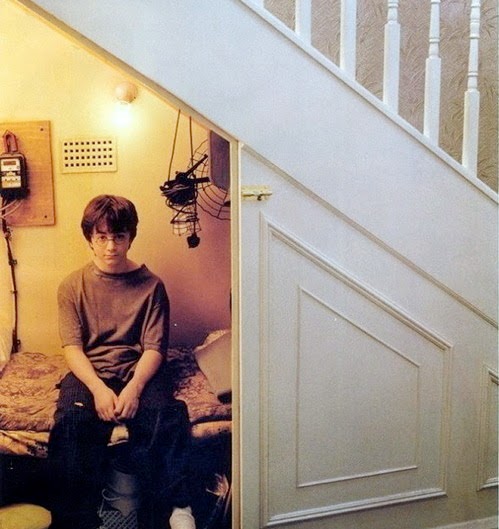
Does Childhood Stress Explain Why Harry Potter Was So Short for His Age?

Warner Bros.
“Perhaps it had something to do with living in a dark cupboard, but Harry had always been small and skinny for his age…[he] had a thin face, knobbly knees…and wore round glasses held together with a lot of Scotch tape because of all the times Dudley had punched him on the nose.”

And so we are introduced to The Boy Who Lived, the Chosen One—the famous Harry Potter. His seven books have been translated into 73 different languages and sold over 450 million copies worldwide.

But readers wouldn’t guess, after author J.K. Rowling’s introduction of Harry in Chapter 2, that the orphaned boy would be the one to defeat the powerful and devastating Dark Lord Voldemort. Snubbed by his only remaining family, bullied by his cousin and classmates, and residing in the cupboard under the stairs, Harry is short, skinny, and totally non-threatening.

And it’s clear to us why. His Uncle Vernon, Aunt Petunia, and cousin Dudley Dursley—to whom he was passed as an infant after the death of his parents— ensure that he’s properly malnourished at all times. After spending a day cleaning the Dursleys’ entire house and doing yardwork in the blazing July heat (on his 12th birthday, no less), Aunt Petunia prepares for Harry “two slices of bread and a lump of cheese” before sending him off to hide during their dinner party with the Masons. It’s no wonder he’s so small for his age.

But perhaps something other than the physical abuse held back his growth, too. Beyond the malnourishment, it’s possible that Harry Potter suffered from something similar to what is known as psychosocial short stature.

February 6, 2014

Love, Love Medulla: The Neuroscience of Beatlemania

The term “Beatlemania” has come to be associated with many things over the past half-century.

Coined in October 1963 during the Beatles’ tour of Scotland, the extent of Beatlemania in the United States is obvious by record sales alone. Between the 1964 release of “I Want to Hold Your Hand” on the Billboard Hot 100 and the Let it Be EP in 1970, the Lads from Liverpool had a Number One single for, on average, one out of every six weeks, and the top-selling album once every three weeks.

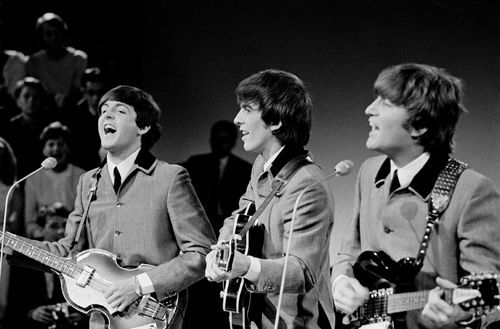
But to most, “Beatlemania” incites a vivid image of frenzied fans, predominantly teenage girls, looking as though they’ve just witnessed a gruesome murder. Fat buttons proclaiming “I LOVE GEORGE” adorn cardigan sweaters, hanging on for dear life as their owners attempt to push past overwhelmed human police barricades. Nurses stand at the ready, armed with smelling salts and ready to rouse the next fainting victim. Lots of tears. Lots of screaming.

As we approach the 50th anniversary of John, Paul, George, and Ringo’s first U.S. appearance on The Ed Sullivan Show this Sunday, we can’t help but look back and laugh nostalgically. Just what was it about the moptop haircuts, Cuban heels, and “yeah yeah yeah”s that turned us, our parents, or our grandparents into primeval beings whose sole purpose was to drown out the blare of a Vox AC30 amplifier?

As it turns out, neuroscience can (partially) explain the phenomenon.

December 18, 2013

Why Does Time Fly as We Get Older?

Originally posted at Scientific American MIND.

Another year; another Christmas around the corner.

The conversation around the watercooler these days has evolved into the annual “where has the time gone?” discussion—how quickly the neighborhood kids have become high school graduates; how our hot July beach vacations seem like they were just yesterday; and how we haven’t baked cookies or sent cards or bought gifts yet because time has just been flying by.

It’s become a common complaint—almost a joke—that time seems to whiz by faster and faster as we get older.

Of course, aging doesn’t grant us the power to disrupt the space-time continuum, so it’s not a real problem. But why do we perceive it to be?

April 19, 2013

Fool yourself out of your fear of public speaking

Hey, braniacs!

Once again, I'm over at NBC's The Body Odd blog today. This time, I'm covering a cool new study about how understanding our bodies' stress responses can actually reduce the response itself. In this case, researchers focused on the fear of public speaking, something that is estimated to affect 75% of us.

Check it out here!

April 10, 2013

Why do we sigh?

I sigh. A lot.

And, I realize, it's only when I feel discontent.

I sigh when I'm frustrated by statistics and can't make sense of the code on my computer screen. When I sit in class for three hours and daydream of all the productive things I could be doing. When I'm confused by the competing research literature on the desk in front of me. When I'm disgruntled by somebody's ignorant comments.

But why do I do it? Does it help regulate my breathing when I'm stressed? Is it a subconscious action I do to express to those around me that I'm anxious or upset? Perhaps a mental reset button, so to speak?

In fact, it may be a combination of all three.

February 17, 2013

Fainting at the sight of blood

I remember the day so well because the circumstances were so ridiculous.

It was my freshman year of high school, the Friday before homecoming weekend. Football players and cheerleaders wore their respective uniforms to class, I had a blue pawprint painted on my face, and everyone in class was antsy in anticipation of the pep rally at the end of the day.

Our health teacher put on some Red Cross first aid video to appease our restlessness. Halfway through the video, an actor began "bleeding" profusely from the arm. Just as his friend ripped off a bit of his t-shirt to staunch the blood, I saw a flash of blue jersey out of the corner of my eye.

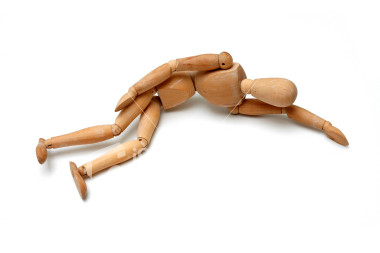
One of the star football players in my class—a pretty massive beast of a human being—slumped down his chair then lay flat on the floor. He was passed out cold.

Do you get woozy when you see blood? It seems like an oddly dramatic physiological response for just seeing a little red liquid, right? As it turns out, fainting at the sight of blood may be a primitive reflex buried deep in our brain.

July 23, 2012

Superhero science: tapping into our super-strength with adrenaline

In 1982, Angela Cavallo of Lawrenceville, Georgia received the Mom of the Year Award. (Not a real award, but if it existed, she would probably win, hands down). Her son Tony was working on the suspension of his 1964 Chevy Impala when the car suddenly slipped off the jack and pinned him in the wheel well.

Angela dashed outside to see her unconscious son trapped under the car. She yelled for a neighbor to get help but it was taking too long, so she took matters into her own hands. Literally. She proceeded to lift the car—high enough to replace the jacks—and pull Tony out from beneath.

Yep, you read that correctly. She lifted a 3,500-pound car from the ground.

There's not much more information to be found about Mrs. Cavallo aside from this incredible story, but I'll safely assume she wasn't a body builder. In fact, I'll bet the same for the other individuals who have also demonstrated this sort of "hysterical strength." But that's beside the point—if you were placed in a similar situation, you could probably lift a car, too!

It's all thanks to the handy little hormone called adrenaline.

July 13, 2012

Chronic blushing: When it goes beyond embarrassment

A teacher calls on you when your hand isn't raised, and you feel the familiar sensation as your classmate's eyes immediately dart toward you. Mrs. So-and-So watches expectantly, smirking. A surge of blood races from your gut to your head and your cheeks become warm. Hot. A sheepish smile involuntarily follows. You know you're bright red, and that embarrasses you even more.

Everyone knows what it feels like to blush—whether from embarrassment, emotional stress, or even just receiving a compliment. Perhaps worse than the act itself is knowing that everyone else can see the physical manifestation of your discomfort, which inconveniently functions to further redden your face.

But for 5-7% of the population, blushing is a chronic problem—happening both more frequently and with greater magnitude than the average person. Physically, it's rather harmless—but psychologically, it can be devastating.

In late May, Brandon Thomas, a 20-year-old University of Washington student, committed suicide by jumping from his 11-story dorm. "I am tired of blushing," read his suicide note. "It is exhausting to wake up everyday and have to find little ways to avoid blushing situations."