Navigate

Showing posts with label gender. Show all posts

November 16, 2014

#SfN14 Day 2: On the Origin of Sex Differences in the Brain (Theme E)

This post is part of my series on the 2014 Society for Neuroscience annual meeting. You can read other posts in this series here. I’m also live-tweeting some sessions @GainesOnBrains. Join the conversation at #SfN14.

This is what a bunch of hungry neuroscientists look
like when it's 5pm and the poster session is over.
One of my mentors likes to occasionally tease me when I bring him data: “You’ve discovered something new. Men and women are different.”

He kids, of course. Male and female brains are different in funny and fascinating ways we don’t quite understand.  My poster (which I presented this afternoon) was on gender differences in the loss of slow-wave sleep across adolescence. I just had a paper accepted (today, actually!) on gender differences in some aspects of sleep apnea. (I could actually probably build a pretty successful career on studying gender differences in sleep alone, actually. If I wanted to.)

So I was very excited to attend Dr. Margaret (Peg) McCarthy’s talk on the origin of sex differences in the brain earlier this afternoon.

Let me get two things out of the way before I begin. First of all, I really admired Dr. McCarthy, who hails from the University of Maryland School of Medicine, for how she spoke about her past and present colleagues, giving credit where credit was due to previous labmates and graduate students. You don’t realize how few people do that until someone does it explicitly.

Secondly, McCarthy covered the history of research in sex differences in the most genius way possible: a parody of The Big Bang Theory theme song. Seriously—it was golden.

The simplistic view of biological sex differences goes a little something like this: an undifferentiated group of cells destined to become the gonads will, by default, be ovaries. But it’s the influence of the Y chromosome that gives half of our population testes. In this way, too, the “female brain” is the “default brain.”
February 6, 2014

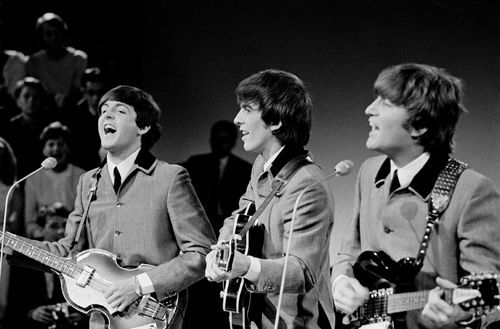
Love, Love Medulla: The Neuroscience of Beatlemania

The term “Beatlemania” has come to be associated with many things over the past half-century.

Coined in October 1963 during the Beatles’ tour of Scotland, the extent of Beatlemania in the United States is obvious by record sales alone. Between the 1964 release of “I Want to Hold Your Hand” on the Billboard Hot 100 and the Let it Be EP in 1970, the Lads from Liverpool had a Number One single for, on average, one out of every six weeks, and the top-selling album once every three weeks.

But to most, “Beatlemania” incites a vivid image of frenzied fans, predominantly teenage girls, looking as though they’ve just witnessed a gruesome murder. Fat buttons proclaiming “I LOVE GEORGE” adorn cardigan sweaters, hanging on for dear life as their owners attempt to push past overwhelmed human police barricades. Nurses stand at the ready, armed with smelling salts and ready to rouse the next fainting victim. Lots of tears. Lots of screaming.

As we approach the 50th anniversary of John, Paul, George, and Ringo’s first U.S. appearance on The Ed Sullivan Show this Sunday, we can’t help but look back and laugh nostalgically. Just what was it about the moptop haircuts, Cuban heels, and “yeah yeah yeah”s that turned us, our parents, or our grandparents into primeval beings whose sole purpose was to drown out the blare of a Vox AC30 amplifier?

As it turns out, neuroscience can (partially) explain the phenomenon.

July 22, 2013

Are we pushing pink on girls...or pushing boys away?

My brother got a remote-controlled race car for his 4th birthday. I, being the jealous big sister, begged and pleaded to play with the car at every opportunity. I should not have been shocked to get my very own remote-controlled car that Christmas.

But I was. The car was black and had a spider emblem on the side. "Santa must have written the wrong name," 6-year-old me declared, ruffling through the pile of balled-up wrapping paper to check. But indeed, the car was for me. The boy car.

Last week, The Conversation published a piece by Melissa Hines, Professor of Psychology at Cambridge University, addressing gender differences in toy preference. Towards the second half of the article, the focus shifts toward girls' preferences for pink and its implications on cognitive development in both males and females.

December 20, 2011

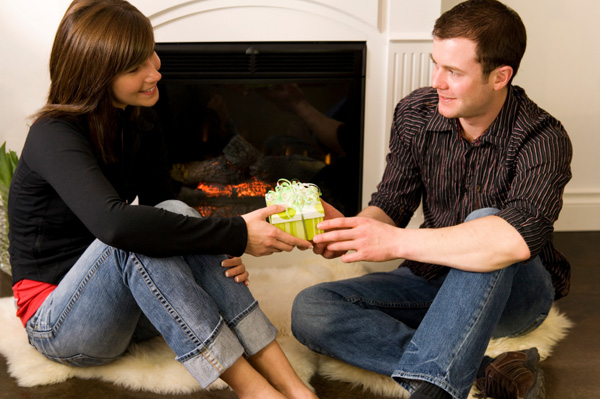
Bad Christmas gifts: A neuroscientific gifting guide

This article can now be found over at Brain Blogger as of today (12/25), so please check it out there. Merry Christmas, neuroscient-astic readers!