Navigate

Showing posts with label sleep. Show all posts

January 14, 2016

Should I Stay Up an Extra Hour Being Productive, or Give Myself an Extra Hour of Sleep?

It’s every student’s dilemma. Should you keep studying and delay your bedtime, or shut the books and hit the hay?

My little stinker of a cat, Yoshi, understands the
importance of sleep.
In college, I regularly stayed up until midnight or 1am studying and writing lab reports, even though my alarm went off at 5 each morning for rowing practice. It was always so tempting to stay up late when there was just so much work to be done. So much work, all the time.

Although running on 4 or 5 hours of sleep in college let me finish a lot studying, I was sleepy. I found myself nodding off during class, eating more food to keep myself awake, and I became more susceptible to catching colds. I found it harder to study because I hadn’t paid attention well in class. On occasion, I didn’t do as well on tests as I would have liked to. Sometimes I even found myself being short-tempered toward my friends.

Sound familiar?

These days, after working in a sleep research laboratory for the past four years and becoming intimately acquainted with what the research says about sleep curtailment, I am much more inclined to shut the books, close my laptop, and crawl into bed.

In short, there are literally no benefits - none, zip, zero, nada - to depriving oneself of necessary sleep.

Read the rest of this at Beasts, Unburdened  here. Beasts, Unburdened is a community of future veterinarians who come together to discuss challenges they face in their journey. If you or someone you know is a veterinary student, follow the blog! It's run by my brother, and he's pretty cool.

October 6, 2015

How Much Can You Really Learn While You're Asleep?

In Aldous Huxley’s 1932 novel Brave New World, Polish boy Reuben Rabinovitch falls asleep next to a radio receiver. When he wakes up, he is able to recite the entire broadcast. He has no idea what any of it means, though - it’s all in English.

Maria Zarnayova/EPA
Countless articles today claim that you can actually learn music, hone your foreign language skills, or cram for tomorrow’s math exam during sleep. And there is a whole industry trading on this idea. Subliminal message tapes, popularized by self-help guru Tony Robbins, promise to help you stop smoking, lose weight, and even brush up your golf skills and find love - all the while catching some shut eye.

The big sell of “sleep learning” is seductive - how lovely it would be to be productive while we lie like lifeless lumps in bed. But is it actually based on any evidence?

Read the rest at The Guardian here.

July 29, 2015

When is the Best Time of Day to Keep a Diary?

Thinkstock
For over 15 years now, I’ve faithfully kept a diary. Every night, from age 11 until my senior year of college, I snuggled into my bedsheets and rehashed the day’s events before nodding off to sleep. Even though I’m more likely to scribble down my thoughts just once or twice a week nowadays, I’ve found that writing in a diary before bed is a fun way to capture my memories - no matter how frivolous - to enjoy again years down the road.

Now a new study, published recently in The Quarterly Journal of Experimental Psychology, suggests that my nightly routine might help with something else: being able to recall a specific day’s events from memory weeks later.

Importantly, however, I may be at a greater advantage than some diarists because I typically write in my diary just before hitting the pillow, instead of waiting until the next morning.

Read more of my guest post with the British Psychological Society's Research Digest blog here.

April 27, 2015

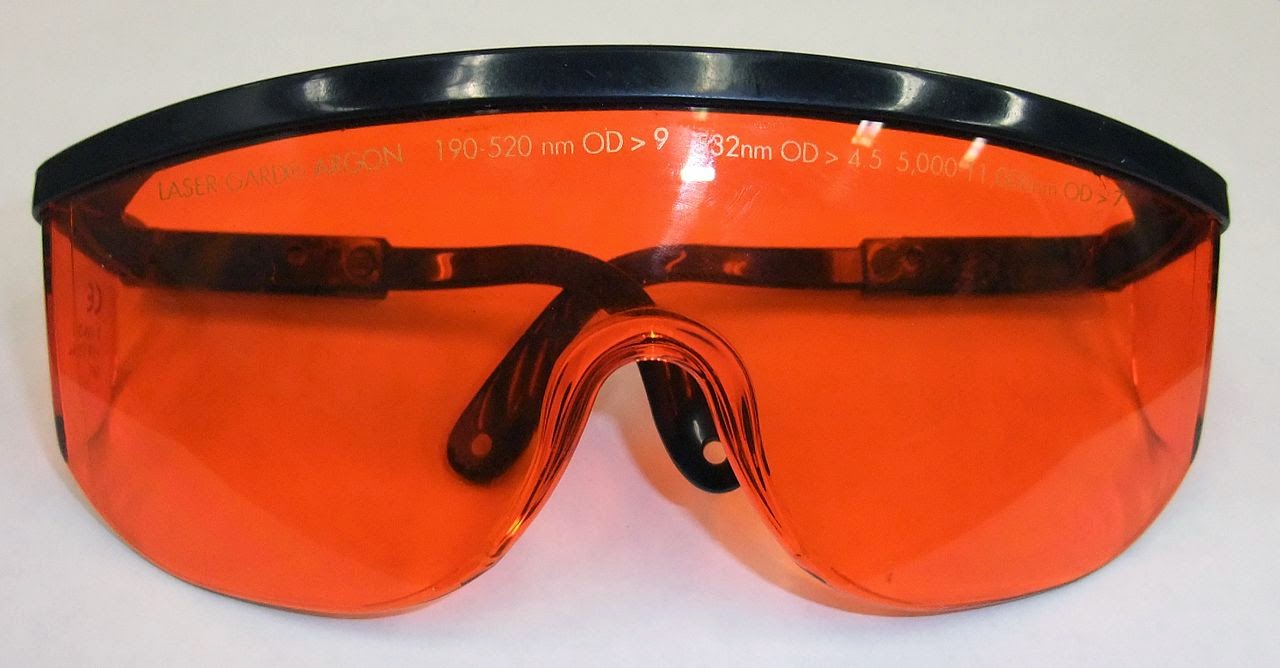
Can Wearing Orange-Tinted Glasses before Bed Improve Sleep? Only One Way to Find Out...

I recently wrote about the terrible sleep habits of the characters in House of Cards. I disapproved of Frank Underwood’s late-night computer work in the Oval Office, his new midnight iPad gaming habit, and Claire taking her laptop to bed with her.

But I must confess my hypocrisy.

Despite my preaching - and despite being a sleep researcher myself - the last thing I do before I flip off the lights and snuggle into my bedsheets is play games on my iPhone.

I know, I’m bad - but I also know I’m not the only guilty person here.

Chhe (Wikimedia Commons)
Although evidence suggests that the blue light emanating from phones, tablets, laptops, televisions and e-readers can affect the quality of our sleep - in turn affecting our health and well-being - many of us can’t help logging in and tapping away when we should be winding down. A Time/Qualcomm poll of 5,000 people worldwide suggests that nearly a quarter of those between the ages of 18 and 24 generally don’t sleep as well because of technology. Even worse, 40-75% of folks across all age groups report keeping their phones within reach while they sleep at night.

But there might be a solution. Earlier this month, orange-tinted glasses, or “blue blockers,” were touted by the New York Times as a good option for those who simply can’t avoid technology before bed.

As a concerned scientist, I decided to do an experiment on myself. I hopped onto Amazon, bought an $8 pair of orange glasses, and formulated my research plan. Without changing any of my other habits, would wearing these glasses an hour before bed improve the quality of my sleep?

March 5, 2015

The House of Cards Characters Have Terrible Sleep Hygiene

It’s entirely possible that I’ve been staying up too late this week. After leaving the lab at the end of the day, I’ll head home to binge on the political drama House of Cards, the third season of which was dumped onto our Netflix queues last Friday.

They'd be better off just going to bed. (Tumblr)
Simultaneously, the National Sleep Foundation is also sponsoring Sleep Awareness Week from March 2nd to 8th, which makes me feel guilty for how poor my sleep hygiene has been lately. But perhaps I shouldn’t be too hard on myselfafter all, I’m not the Leader of the Free World who needs to make rational, clear-headed decisions about my country on a daily basis.

Since the first episode of the show, I’ve been pretty appalled by the Underwoods’ poor sleep habits. In the spirit of Sleep Awareness Week, here are three simple sleep hygiene rules that Frank and Claire would be wise to follow.

November 28, 2014

Exposure to Different Forms of Violence Affects Kids’ Sleep Differently

I have a guest post today with the British Psychological Society's Research Digest blog. The piece is based on a new study in the journal Sleep Medicine showing that children exposed to different forms of violence in their community are plagued with different types of disturbed sleep.
Two particular types of violence stood out to researchers in terms of their association with sleep disturbance. Controlling for relevant confounders (such as age, gender and family income), individuals who were physically assaulted had a shortened sleep duration (by 35 minutes on average), exhibited almost three times as much wake time after sleep onset, and 6 per cent lower sleep efficiency than kids who did not experience physical assault. These effects were also seen three months later at follow-up. 
On the other hand, children who witnessed a homicide had twice as much wake time after sleep onset, greater night-to-night variability in sleep duration, and more self-reported sleep problems than kids who had not witnessed a homicide. These findings, however, did not persist at follow-up.
Read more of the post here!

June 13, 2014

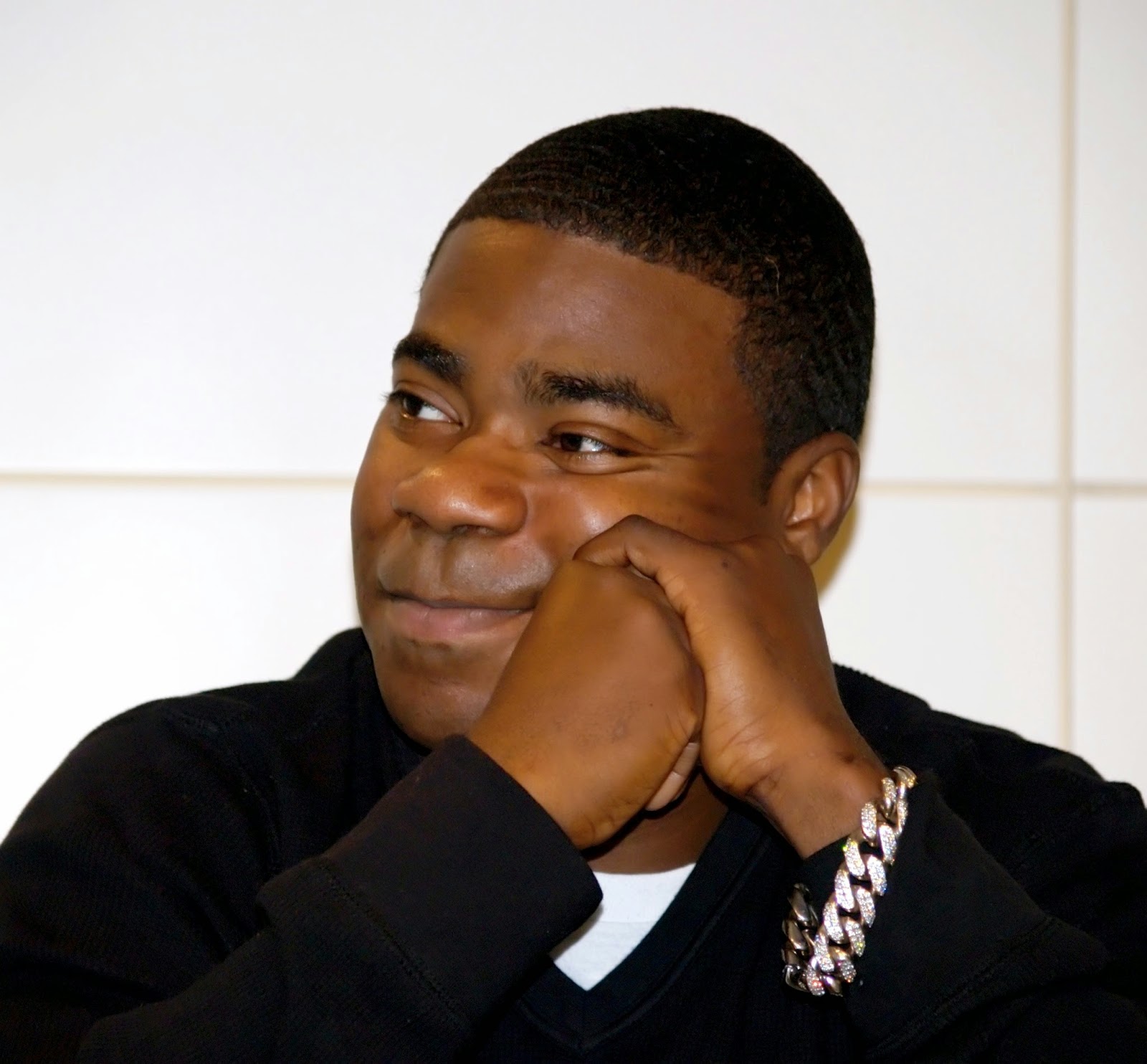
Tracy Morgan's Accident Tells Us What We Already Know about Drowsy Driving

David Shankbone, Wikimedia Commons
The National Sleep Foundation has done a great job of terrifying citizens since the 1990s with its annual Sleep in America poll results. In 2005, 60% of adult drivers in the U.S. reported that they’d driven a vehicle while drowsy in the past year, and 37% said they had actually fallen asleep at the wheel. Startlingly, 11 million drivers (4% of the population) admitted to an accident or near-accident from actually dozing off at the wheel.

The outrage surrounding “30 Rock” comedian Tracy Morgan’s crash over the weekend is for good reason.

Kevin Roper, whose Wal-Mart truck struck Morgan’s limousine bus on the New Jersey Turnpike early Saturday morning, had reportedly not slept for over 24 hours when the crash occurred. As of Wednesday, Roper denied these claims, pleading not guilty during his arraignment. The multi-vehicle crash killed comedian James McNair and critically injured several others.

Driving while sleep-deprived is such a terrible idea that it begs the question of why anyone would attempt it in the first place. But indeed, while study after study confirms that Americans are sleepier than ever before, nearly one in 10 of us also commutes an hour or more to work everyday. Add in the stress of finances, parenting, maintaining a social life, and trying to fit in a few minutes of exercise. It’s hardly surprising that drowsy driving is commonplace.

October 25, 2013

Alcohol, Sleep, and Why You Might Re-think that Nightcap


"Alcohol makes you sleepy."

We've all heard it. Many of us have experienced it. A few of us even swear by it—enough to ceremonially partake in a glass or two of wine before crawling into bed.

A nightcap.

In fact, a little booze has been experimentally (and anecdotally) demonstrated to help us fall asleep faster and increase slow-wave, or deep, sleep in the first half of the night.

But its effect on other aspects of sleep—notably, the second half of the night—leaves much to be desired.

What causes alcohol's strange and dichotomous effect on the sleeping brain? And the real question—do you accept the nightcap or not?

October 3, 2013

Sleep Cycle App: Precise, or Placebo?

Thanks to the Internet, it's the age of self-diagnosis. People like to learn about (and treat) themselves through technology.

Especially when pretty graphs are involved (see fancy screenshot at right).

As a sleep researcher, I was interested in my friends' use of sleep-tracking apps, and I received a pretty positive response when I prompted them for their thoughts:

"I'm a believer."

"When I use it right, I feel less groggy."

The website sleepyti.me and smartphone apps like Sleep Cycle use the average human's sleep pattern to determine the best window of time that you should wake up. The idea is that interrupting the "wrong" sleep cycle stage, such as slow-wave ("deep") sleep or REM (rapid eye movement, when dreaming occurs), results in grogginess upon awakening, as many of us can attest. Sleep researchers call this phenomenon "sleep inertia."

It's such a big deal that, in the sleep laboratory, we as techs are instructed not to wake participants if they're in REM, even if the experimental recording time is over.

So when a friend told me that he only feels refreshed after (according to his sleep-tracking app) eight REM cycles, I got a little skeptical, given the average person will only experience four or five REM periods per night.

What's the verdict on sleep-tracking apps? How do they work, and how accurate are they? Is it all a big scam, or perhaps the placebo effect at work?

March 3, 2013

Sleep studies: What's all that stuff they put on me?!

The following is a post written for the upcoming blog run by graduate students at Penn State College of Medicine. The blog will be aimed at high school students and residents of the community. I'll use these posts to introduce you to the research I'm conducting as a graduate student in neuroscience.

Have you ever had a sleep study done?

Perhaps you or a loved one has been referred to a sleep clinic for insomnia, apnea, narcolepsy, or restless legs syndrome. Maybe you’ve participated in a sleep research study—and if you’re in central Pennsylvania, you may even be part of our laboratory’s adult or child general population cohorts!

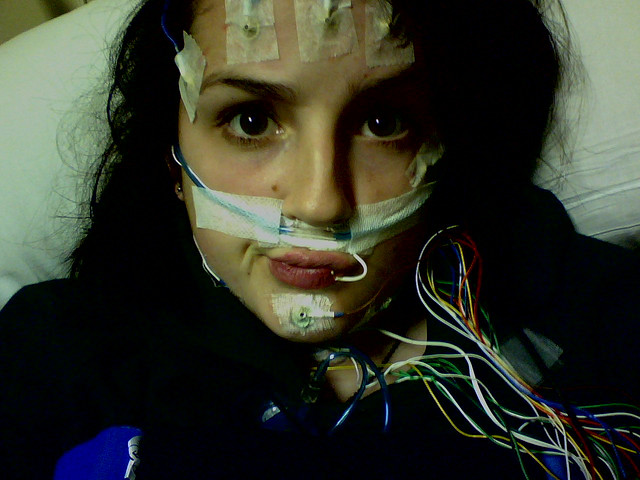
The hallmark of getting a sleep study done is—well, looking something like this: 


Looks rather scary, right? Fear not—each component has a very simple purpose.

June 7, 2012

Narcolepsy: More than just falling asleep on the job

Check out this short video of "Rusty the Narcoleptic Dog." I was first introduced to Rusty in a video presented to my high school psychology class. As expected in a classroom full of teenagers, we erupted into a fit of laughter when the happy-go-lucky dachshund suddenly collapsed into a deep sleep:


Gallup polls reveal that 56% of Americans complain that daytime drowsiness is a problem in their lives, the majority of which is caused by sleep deprivation. A controlled, objective scientific study once revealed that 34% of participants were considered "dangerously sleepy," even when they didn't complain about daytime sleepiness.

America is a sleepy country—but narcolepsy takes it to a whole new level. Imagine feelings of exhaustion at all times, accompanied by inappropriate sleep attacks. Sure, falling asleep on the job is embarrassing and unprofessional, but also imagine the danger of a narcoleptic attack while driving. What is narcolepsy, and what causes this mysterious disorder?

April 1, 2012

Coffee: A caffeinated chronicle

The following is a story about a college girl named Jordan.

Jordan blindly, exhaustedly, yet somehow successfully stumbled her way through college. In her final two years, she averaged 4 or 5 hours of sleep every night due to schoolwork, labwork, club responsibilities, and the dreaded 4:55 A.M. alarm for crew practice.

She only drank one coffee, ever—a pumpkin spice latte—simply because the rest of her team regularly raided Starbucks after races. It tasted alright. Oh, and she had some orange energy drink before a Developmental Bio exam once. Her pee was subsequently green.

A graduate student once told her, "If you get into grad school, you'll become addicted to coffee." Jordan scoffed at the silly, weak student, and vowed, "Ha! Never."

Then one day Jordan had a Bob Evans mocha, and her life was forever changed.

December 5, 2011

Why yawning is contagious

Check out the woman on the right and try not to yawn. Go on, give her a good ten seconds of your time. In the spirit of A Christmas Story, I triple-dog dare you. Really—try your absolute hardest not think about yawning as you read this post! C'mon, you know you can do it—you've been dared before, and you always fail miserably. NO YAWNING!

Chances are you've already let out an extended, eye-moistening, feel-good yawn or two at this point. I've personally counted six of my own since starting this post.

We've all heard that "yawning is contagious"—but why? In this busy world, we don't sleep as much as we should. Gallup Polls in recent years have found that 56% of Americans report drowsiness as a daytime problem, and 34% of us are "dangerously sleepy." Does seeing someone yawn remind us that we, too, are exhausted are must follow suit?

That may be part of it, but the true reason may go much deeper. As it turns out, yawning may have ancient roots in social bonding.

November 17, 2011

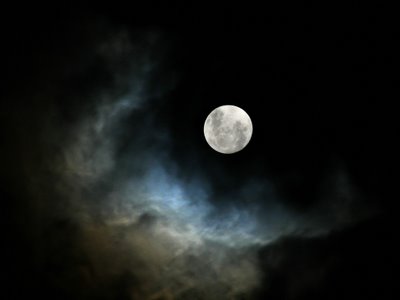
Lunacy by the full moon-acy: Is it real?

When I was in elementary school, my teacher told my class that the full moon makes people crazy.

She said it was caused by the gravitational tug of the moon on the Earth—the same forces that cause high and low tides—the argument being that our bodies are more than 60% water.

I was impressionable and fascinated by weird science—who isn't at that age?—and have long since stored that "fact"oid in my ever-developing hippocampus. The full moon last week (which, not to mention, was GINORMOUS—did anyone else notice?) reminded me of this theory and made me want to do a little research of my own.

Does the full moon really do something to our brains?

November 3, 2011

Goodbye, sun. Hello, confused suprachiasmatic nucleus!

In my book, Ben Franklin is the man. An expert swimmer, self-taught pentaglot, and inventor of the "glass harmonica," he was also among the first to suggest the notion of Daylight Savings Time. A 1784 essay by Franklin suggested that an extra hour of daylight in the evening would save on candles.

I love that extra hour. As a kid during the summertime, it meant my brother and I could play our aptly-named "Kick the Ball" game in the yard after dinner. Nowadays, it means I can see where I'm going when I walk home from an afternoon in lab.

The end of Daylight Savings Time (which occurs at 2 a.m. this Sunday) means an end to all that, and the beginning of—well, winter. And winter is...cold. So very cold...

For most of us, changing our clocks back an hour is no big deal—in fact, it has its perks over "spring forward" in that we get an extra hour of sleep. But for others, changing the time can have a big impact on our circadian rhythm.