Navigate

Showing posts with label happiness. Show all posts

February 6, 2014

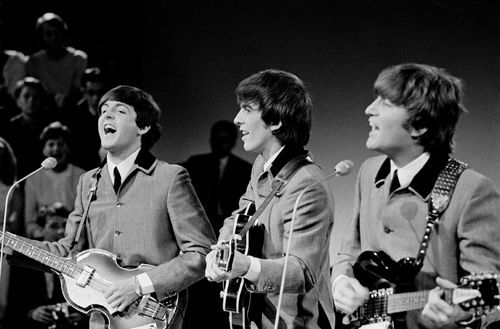
Love, Love Medulla: The Neuroscience of Beatlemania

The term “Beatlemania” has come to be associated with many things over the past half-century.

Coined in October 1963 during the Beatles’ tour of Scotland, the extent of Beatlemania in the United States is obvious by record sales alone. Between the 1964 release of “I Want to Hold Your Hand” on the Billboard Hot 100 and the Let it Be EP in 1970, the Lads from Liverpool had a Number One single for, on average, one out of every six weeks, and the top-selling album once every three weeks.

But to most, “Beatlemania” incites a vivid image of frenzied fans, predominantly teenage girls, looking as though they’ve just witnessed a gruesome murder. Fat buttons proclaiming “I LOVE GEORGE” adorn cardigan sweaters, hanging on for dear life as their owners attempt to push past overwhelmed human police barricades. Nurses stand at the ready, armed with smelling salts and ready to rouse the next fainting victim. Lots of tears. Lots of screaming.

As we approach the 50th anniversary of John, Paul, George, and Ringo’s first U.S. appearance on The Ed Sullivan Show this Sunday, we can’t help but look back and laugh nostalgically. Just what was it about the moptop haircuts, Cuban heels, and “yeah yeah yeah”s that turned us, our parents, or our grandparents into primeval beings whose sole purpose was to drown out the blare of a Vox AC30 amplifier?

As it turns out, neuroscience can (partially) explain the phenomenon.
December 12, 2013

'Twas the Neural Pathway of Christmas

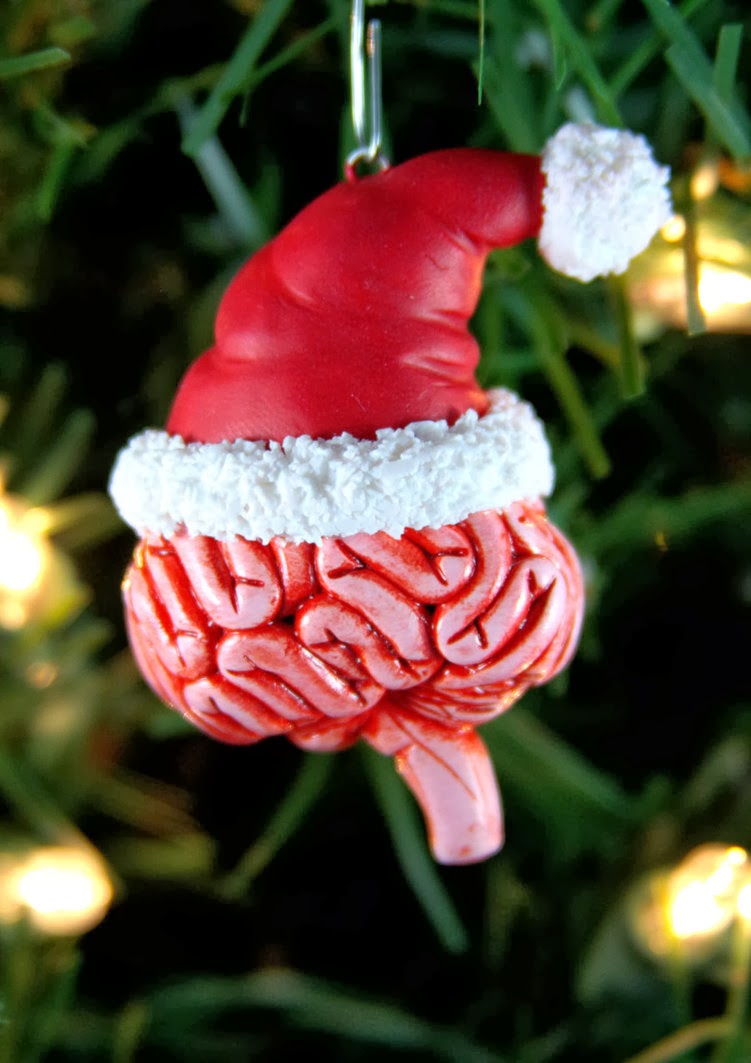
The following is an original and extraordinarily nerdy rendition of the classic Clement Clarke Moore poem adapted by yours truly, describing the basic pathway of happiness one feels when one sees a pleasant image—like Santa Claus!

Ornament by Neverland Jewelry.
'Twas the neural pathway of Christmas as my eyes do behold
A vision of St. Nicholas—red, so jolly, and bold.

His image burns into my retina, transmitting down optic nerve
Before the optic chiasm crosses in an unexpected swerve.

From optic tract to LGN—the sensory relay
Of six alternating layers; a complex neural highway.

Radiation to layer 4 of the visual cortex comes next—
But what follows leaves even the greatest minds perplexed.

For this vision becomes a signal, signal becomes a sense
Conversion of molecule to emotion—a feeling so intense.

Glutamatergic synapses fire onto the VTA—
A group of tiny neurons on the floor of the midbrain.

But wrong you are if you believe the brain to be tired,
For from VTA to nucleus accumbens dopamine is fired.

It is from this tiny region that glimpsing Santa brings such joy—
Pleasant emotional perception for every girl and boy.

So fleeting this emotion, as your auditory cortex hears,
 "A brainy Christmas to all—now, onward, reindeer!"

August 29, 2013

Why do we cry when we're happy?

It's been awhile, braniacs. But I have an excuse! A good one, I swear!

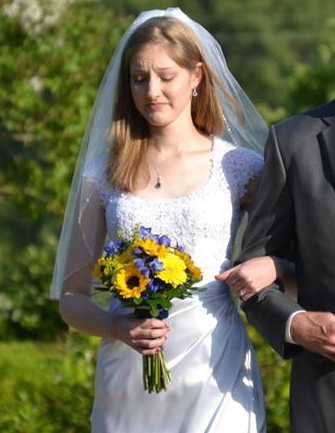
I got married to the love of my life on August 10—who I, of course, met in a neuroscience lab a few years ago.

Something inexplicable has been plaguing me the past few months, though. Getting married, including the months of stressful planning and nightmares leading up to the big day, was the happiest time of my life.

I reveled in choosing dresses and shoes, booking vendors, and constructing centerpieces. I saw my family and friends a lot over the past few months. And, after all, I was celebrating one of the purest and most joyful things that can be celebrated in this crazy, mixed-up world: love.

But, for some reason, I found myself crying a lot more. Not out of sadness or frustration or hopelessness, though.

I mean, I couldn't even keep it together while walking down the aisle—something every girl, growing up, likes to daydream about...right? (See pathetic photo.)

Most of us have heard that crying, in essence, is good for us—that it relieves us when we're sad, releases stress and toxins, yadda yadda.

So what was with my sobbing on what was inarguably the happiest day of my life?

November 19, 2012

Why you should give thanks this Thursday—and always

Sometimes our world can be pretty crappy.

There's violence and crazy people. Maybe your candidate didn't win the election. Perhaps you hate your job, and that—on top of life's other personal, familial, and financial burdens—is wearing you down. Maybe you got to your morning coffee after it went cold, and that set off a bad tone for the rest of your day.

If you're celebrating Thanksgiving this Thursday, don't forget the true meaning of the holiday between the stressful hubbub of cooking, shopping, planning, and appeasing Great Aunt Gertie: giving thanks.

As it turns out, expressing gratitude is more than just a nice idea—it's beneficial to your health and happiness.

January 19, 2012

Fur-iends with benefits

Apologies for the cheesy blog title.

My brain for the past two weeks has been a whirlwind of—well, brains. I'm in a fairly intense five-week neuroanatomy class and my neurons have been abuzz with images of brain slice after brain slice—so much that transverse sections of the brainstem were beginning to resemble a pug's face. The wrinkly cerebellum was the forehead, and the pons stained darkly resembled the snout. But I digress.

Hallucinating said "pug," combined with me missing my 11-year old greyhound and best friend Patrick (above) back home and my upcoming orientation at the Harrisburg Humane Society (so excited!) prompted me to find out: what is it about pets that, simply put, makes us feel good?
This post was chosen as an Editor's Selection for ResearchBlogging.org