Navigate

Showing posts with label psychology. Show all posts

September 11, 2015

Why We’re Obsessed with Pumpkin Spice Everything, According to Science

It was a humid, sticky 90 degrees when I made a quick trip to the grocery store in shorts and a tank top earlier this week. Despite the heat, however, the store clearly wanted me to think fall.

'Tis the season. ParentingPatch (Wikimedia Commons)
Weaving in and out of each aisle, I was inundated with row upon row of pumpkin spice M&Ms, pumpkin spice yogurt, pumpkin spice Oreos, pumpkin spice cereal, pumpkin spice beer, pumpkin spice cookies, pumpkin spice bagels, pumpkin spice Pop-Tarts, pumpkin spice popcorn, pumpkin spice hummus, pumpkin spice creamer for my pumpkin spice coffee…

At the risk of sounding any more like Forrest Gump's shrimp-obsessed friend Bubba, let’s just say that we’ve all gone a little mad. And with the official release of everyone’s favorite - the Starbucks Pumpkin Spice Latte - this past Tuesday, it’s time we ask: why are we so obsessed with pumpkin spice everything?

July 15, 2015

#BrainBits 2: "Why Do I Remember Certain Things in Certain Places?"

This is the second post in my new #BrainBits series, where I'll answer your burning neuroscience questions in 60 seconds or less. If you have a question you'd like me to answer, you can e-mail me, tweet me, or submit your questions anonymously here.

Man Vyi (Wikimedia Commons)
Why do I only remember certain things in certain places? 
I'm glad you asked, because this happens to me all the time. I'll think about something, get off the couch and go to the kitchen to do whatever I told myself I needed to do, then completely lose my train of thought. Why did I come in here, anyway?

Funny enough, psychologists have actually studied this.

In a 2011 paper, Gabriel Radvansky and colleagues from the University of Notre Dame had participants play a computer game. In a virtual room, they were instructed to pick up an object from a table and take it to another table. The objects varied in color and shape. Importantly, as long as the participant was "carrying" the object, it was invisible to them.

Sometimes the participants' video game characters simply had to cross the room to put the object down. Other times, they had to walk through a virtual doorway to get to the table.

At random times throughout the experiment, participants were asked what object they were currently carrying. Interestingly, walking through a virtual doorway resulted in less accurate and slower responses than when they simply needed to cross a room.

MetroParent
But why? The authors suggest that we keep information in our working memory for as long as we consider it relevant. But when something related to the context of our memory changes — like the room we're in when we think about something — the memory must no longer be important enough for us to remember. Our brains probably think they're helping out by purging that memory for us. This is consistent with the hypothesis that, in general, recently-formed memories are extremely vulnerable to many interfering forces if they have not yet had a chance to consolidate.

To answer the broader question: we associate certain memories with certain places, and that's how we make sense of all the input flooding into our noggins. Our brains have incredible storage capacity, but they can only do so much. (Elephants* never forget, though.)

Do you forget more
When you walk through a door?
Let us know
In this anonymous poll!

Stay tuned for next week's #BrainBits: "Why do I get hangry (angry when I'm hungry)?"


July 3, 2015

Orange is the New Bleak: What the SHU Can Do to Your Brain

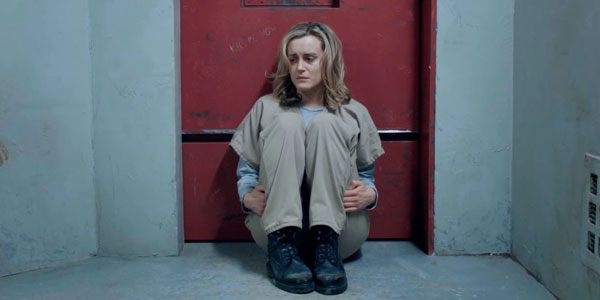
The inmates of Litchfield Penitentiary, the fictional setting for the Netflix TV series Orange is the New Black, are not shy women. 

They’ve landed in prison for murder, fraud, stalking, drug-smuggling, theft, and political activism. They do illegal activities behind the officers’ backs. They make their opinions known loud and clear to one another. And they’re not opposed to throwing a few punches, if duty calls.

But all will cease if you threaten to send them to the SHU. Why?


Netflix

The SHU (pronounced “shoe”), or “security housing unit,” is a separate prison facility designed to isolate inmates from any human contact. While sometimes used to protect the prisoner from harm by others or to themselves (to implement suicide watch, for example), it’s often used as punishment for violating prison regulations. At last count, it’s been estimated that over 80,000 prisoners in the U.S. are housed in the SHU - more than any other democratic country. And while inmates in minimum security may be held in the SHU for a few days at most, those in maximum security prisons can be in solitary for as long as five years.

February 10, 2015

How an ADHD Drug Works to Combat Binge-Eating

Maria Raquel Cochez (Wikimedia Commons)
Last Friday, the U.S. Food & Drug Administration approved the use of lisdexamfetamine dimesylate for treatment of binge-eating disorder. Licensed under the brand name Vyvanse, lisdexamfetamine is the first and only FDA-approved medication for this condition.

But Vyvanse has already been on the market since 2007 for once-daily usage in attention deficit hyperactivity disorder (ADHD) in children and adults.

How does this drug act on two seemingly distinct conditions?

October 16, 2014

Why Do We Find it So Hard to Write About Ourselves?

Throes of Creation by Leonid Pasternak. Wikimedia Commons
For many students right now, an overwhelming mountain stands between them and the Most Wonderful Time of the Year. In this case, I’m not talking about Christmas—rather, I’m referring to the end of the Application Season.

Across the country, high school and college students are feverishly applying to institutions of higher education—doling out, on average, nine applications each. In order to afford the inevitable financial burdens to come, many are also toiling over scholarship applications in parallel. With competition for college admission at an all-time high, surely the perfect personal statement will make students stand out among their straight-A counterparts with glowing teacher recommendations.

But students aren't the only ones to bear the burden of seemingly endless applications; after all, the job market is tough too. More often than not, career-seekers find themselves face-to-face with blank computer screens in an attempt to pen one short masterpiece: the dreaded cover letter.

We’re experts on ourselves. So why do we find it so difficult to write about ourselves?

March 2, 2014

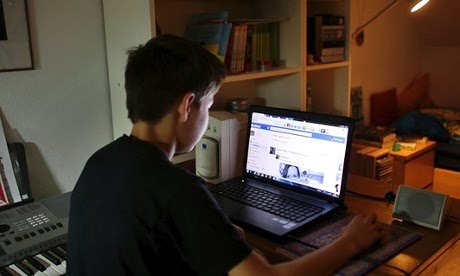
Internet Trolls are also Real-Life Trolls

Have you ever been minding your business on the Internet when a "troll" comes around just in time to ruin your day?

Sure, they're super annoying to deal with, and the anonymity of the Internet provides the perfect playground to hone their skills.

But a new study sheds light on the personality of The Troll. Indeed, they're real-life sadists and truly gain pleasure from their online antics.

Read more at my latest piece with The Guardian here!

June 2, 2013

Sound it out: Do you "see" or "hear" words you have to spell?

I have an extraordinarily intelligent friend. Halfway through veterinary school, she's a hard worker, an avid reader, and scores highly on standardized and academic exams. She excels at what she does, and I've met few other people in life with her brand of outstanding dedication and commitment.

But there is one feature about her that is so strangely unexpected—so strikingly opposite her accomplishments—to the point where it's just comical.

She can't spell to save her life.

Now don't get me wrong. The spellcheck has saved me more times than not, and while I'm no Arvind Mahankali (13-year-old New York native who just won Thursday night's 2013 Scripps National Spelling Bee; seen above competing in 2011), I never had too much difficulty remembering how to spell words that I'd read. What do we know about spelling, and why are some of our most brilliant peers some of the greatest misspellers out there?

May 27, 2013

Study says chilling out—literally—may help us see eye to eye with others

I'm over at NBC's The Body Odd blog today discussing a study in the June 2013 issue of Acta Psychologica.

According to the study, cooler temperatures were shown to reduce something called "egocentric anchoring," or remaining rooted in one's opinion about in issue.

In other words, they were more likely to take another's point of view.

Check out the article here!

April 17, 2013

How stores trick our senses to make us buy more (Part 3 of 5: Touch)

(Read the previous posts in this series: taste and sight.)

There are few things more satisfying than running your hand over a rack full of cashmere sweaters, right?

My dad teases my mom and I when we're out shopping, asking why we must touch and comment on every garment's texture within arm's reach.

I mean, it just feels good. And many a Christmas has passed where my mom has received an especially fluffy sweater from yours truly, her partner in petting.

Sure, a company can do its job to create an attractive, pleasurable product for us consumers. But—you guessed it—the store does its own part in tricking us, ensuring that the phrase "you touch it, you buy it" often holds true.

October 9, 2012

Facebook-stalking your ex; or, how NOT to move on

Do you have an ex?

Do you have a Facebook profile? Does your ex?

Do you stalk your ex on Facebook?

To the untrained eye, that photo of him eating dinner with...that girl...at Olive Garden is no big deal. But Olive Garden was our place, and—wait, is that the watch I got him? Oh, and it looks like he got into that grad school he wanted to go to. The one for which I edited his personal statement and quizzed him with GRE words...

Ugh.

I'm going to tell you something that you probably already know: you should stop doing this. And I'm armed with the psychology of why it's bad!

June 30, 2012

Turning trauma into story: The benefits of journaling

For me personally, June has proven to be a rather disappointing and fruitless month. Just when things began to look brighter, I was involuntarily assigned to be the middle vehicle in a double fender-bender two days ago, and my car now needs almost $1,000-worth of repairs. And as a perfect metaphor for the crappiness of the past month, for whatever reason I was not paid my stipend yesterday for the month of June.

I don't often like to talk about my sour feelings with other people because a.) I'm bad at it, and b.) I have another outlet.

Everyday for the past 12 years (save for a few angsty months in 8th grade), I've been writing in a journal. A good, old-fashioned, hardbound, acid-free journal. Most entries are about the frivolous happenings of the day at school, but as I've gotten older, they've increasingly helped me outline my thoughts and feelings while keeping my head on straight.

Feeling so low, I journaled the night before my car accident, listing ten qualities I liked about myself. Remembering what I wrote as I spent the next day at the body shop and on the phone with the police and insurance companies is, I believe, what kept me from simply bursting into tears and throwing up my hands in defeat.

Writing, as many would probably agree, is therapeutic, and studies in the past two decades have explored the health consequences of secrets, expressive language, and the before-and-after physical and psychological symptoms associated with trauma—an area of research referred to as "writing therapy."